Helping Research & Develop Survival Solutions for Active Shooter Events
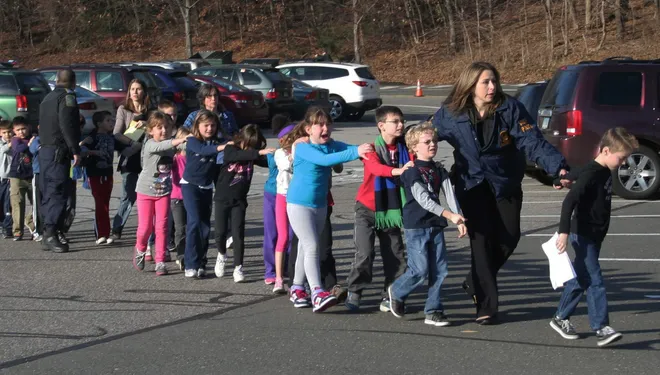
Young Student Deaths – Stark Realities…
Donate to the ASSRF
Please join us in our journey to save the lives of children. Click here to donate.
Active Shooter (AS) events are becoming common place within our school systems. Schools are actively working to provide deterrents to mitigate AS events. When deterrents fail, a robust survival solution for both students and faculty is needed.
The Active Shooter Safety Research Foundation (ASSRF) is a 501 (c) (3) non-profit that exists to help develop systems and methods to help students and faculty access Life Safety, Safe Movement, and Threat Termination systems.
The primary issue facing everyone is Life Safety. The ASSRF supports technologies that can help students (and faculty) actually survive an Active Shooter event, when deterrents fail, through the development and use of the Survival Technologies, Close Quarters Combat (CQB) skills and Tactical Medicine. The ASSRF can help provide those technologies to support students survival in AS events.
In addition, the ASSRF can help provide Safe Movement technologies in the event that students and faculty cannot remain “sheltering in place” but instead, have to evacuate due to either fire, chemical, or explosive threats.
A high value contribution driven by the ASSRF is to provide Stealth Threat Termination capabilities that Maximize Officer Safety while they are achieving termination of the event. These capabilities in turn, also help decrease event duration that can diminish Facilities damage to buildings often inflicted during these events. The ASSRF also supports program development which includes: Advanced Tactical CQB Training for Law Enforcement; Pediatric Advanced Life Support and Pediatric Advance Cardiac Trauma Support training for Volunteer Fire Departments, that cover 70% of Texas, as well as Stealth Life Safety and Safe Movement technologies development for both groups.
Portfolio
Executive Summary
A future-focused school balances robust protective architecture with a nurturing culture, ensuring everyone feels both welcome and secure. Facility designs need to incorporate protective countermeasures and capabilities combined with advanced scientific materials, that stand ready to withstand forced entry, ballistic assault, blast, or other threats. These features must operate quietly in the background, reinforcing normalcy in day-to-day life while remaining capable of swift activation in a crisis.
The ASSRF works to provide unconventional methodologies, designed to deliver Active Shooter Survival Solutions, for students, staff, and law enforcement.
Active Shooter (AS) countermeasures require a high level of secrecy and require compliance with a non-disclosure agreement for individuals to view these technologies, comparable in approach to DOD/DOE Black Projects and Special Access Programs, in areas of R&D, manufacturing, and materials or systems capabilities.
The rationale for the unconventional and highly confidential approach for this project is that Active Shooter (AS) aggressors will likely train to defeat known countermeasures such as security foyers, electronic door access technologies and enhanced classroom door upgrades. In addition, the AS aggressor(s) will likely train to match or defeat School Resource Officer/Armed School Personnel with superior firepower, tactics or improvised explosive, incendiary, or other threats. The ability to provide tactical law enforcement with advanced threat termination capabilities is of paramount importance, which is one of the advantages the Active Shooter Survival Systems can provide.
Defeating the Active Shooter(s) efforts can be achieved through leveraging Stealth Capabilities and emerging science to help create Survival Technologies that provide enhanced protective capabilities, escape and evasion, as well as tactical systems, that aid law enforcement in AS threat termination. Several versions of these Active Shooter Survival Systems exist to complement either new construction or existing facilities. The provision of these technologies for school districts can be achieved by attracting corporate sponsorship, benevolent trusts and federal or state funding. Maintaining a high level of secrecy in areas of R&D, information presentation, and manufacturing, allows for the opportunity to make it extremely difficult for AS aggressors to counter or defeat AS countermeasures; we hold fast to the maxim of-
“You can’t plan to defeat, what you don’t know exists.”
Meet Our Board
“Our focus is protecting children from Active Shooter events”

Chairman
Mike Branco brings his native South African resilience to compliment his American entrepreneurial spirit in supporting the efforts of the ASSRF. Mike is experienced in acquisitions and company operations from across multiple business disciplines ranging from oil and gas to real estate. Mike brings acumen, vision and financial discipline to his position as Chairman of the Active Shooter Safety Research Foundation as he helps guide it towards success.

Vice Chairman
Dr. Douglas Mueller, Ed.D., is a dedicated consummate professional with a spectrum of experience in the fields of Nuclear Energy, Environmental Science, Fire Rescue Emergency Services and recently completed his dissertation for a Doctorate in Education to compliment his Masters of Science. Doug also brings business expertise to the ASSRF Board with experience as Founder and Owner of several highly successful business ventures and has served on the Boards of several Non-Profit Organizations.

Executive Director
Sara Rivas serves as Executive Director for the ASSRF. Sara is a dedicated educator with over three decades of experience in public schools actively teaching elementary, middle, and high school students in the states of Kansas and Texas. Sara is also well versed in Active Shooter Safety Systems and has participated in various Active Shooter Safety Training Programs while serving throughout multiple school districts

Survival Systems Program Manager
J.W. Garrett serves as ASSRF Program Manager for Survival Systems Development. Prior to the ASSRF, J.W. developed training systems for Active Shooter Safety programs designed for Corporate Clients and began leveraging science and technologies to design and develop Active Shooter Survival Systems for Executive Corporate Staff. After the occurrence of the Uvalde Texas school shooting, J.W. shifted systems R&D towards designing Active Shooter Survival Systems for schools to protect our children.

Finance Chairman
Larry Tabbert, Finance Committee Chair for the ASSRF, is a highly experienced manager within the Health Care Industry, overseeing multiple healthcare locations along with the management of various aspects of these facilities, including operations, staffing, finance, and compliance, while ensuring a cohesive and efficient patient experience across all locations. Key responsibilities included oversight of Health System policies and monitoring financial performance as well as maintaining compliance with state and federal regulations.

R&D Chairman
Mike Zamzow, Chairman of the Research &Development Committee for the ASSRF, is a talented Risk Consultant experienced with Loss Prevention and Commercial Insurance for Capital Projects ranging from Stadiums to Automotive Manufacturing and Aerospace facilities. In addition, Mike possess a strong background in metallurgy and welding technologies that allow him to evaluate the feasibility and systems design of ASSRF Active Shooter Survival Systems. Mike is also an inventor and holds several patents for Accident Prevention Safety Systems
THE PROJECT CASE
ASSRF Intent
The purpose of the ASSRF is to provide a “unfair advantage” to public schools, their students, teachers, and law enforcement when the AS aggressor(s) plan and train to defeat known AS countermeasures currently employed by school districts. Conventional systems can be compromised. For example, information provided by students regarding potential AS candidates may become muted if the AS candidates simply mask their intentions, or conduct, and become non vocal on social media, thereby eliminating potential advance warning of an emerging AS event.
Conventional systems employed by school districts such as security foyers, electronic door access, School Resource Officers, Armed School Personnel and classroom door upgrades can be overcome by AS aggressors. Armed School Resource Officers and other overt proactive countermeasures can be neutralized if the AS aggressor(s) employs Improvised Explosive, Incendiary or other threats.
Another benefit of developing and utilizing Active Shooter Survival Systems, beyond enhanced survival outcomes for both students and staff, is to decrease student migration, and learning loss, resulting from Active Shooter Anxiety (ASA). Learning loss occurs when educational progress does not occur at the same rate at which it has when historically compared to previous years (Pier et al., 2021). Post pandemic studies on migration by students from in-person classroom instruction, have resulted in learning loss (Donelly, Patrinos 2021) which can have long term impact for students in areas of future employment probability and lifetime earnings.
Teacher migration and replacement, along with decreased enrollment can also affect funding from federal, state, and local sources. In addition, AS events can also contribute to facility property damage, unless abated though early threat termination. Decreased AS event duration, using advanced countermeasures, will also improve faculty, students, and officer outcomes. Officer fatalities can also be reduced through leveraging advanced tactical countermeasures, thereby reducing officer losses along with additional recruitment and training of replacement officers for local and state agencies
Economic and Business Landscape Problem Statement
- Student and faculty migration can have adverse outcomes (Hanushek et al 2022, App. “A”) for school districts and local government.
- Active Shooter (AS) anxiety from both potential and actual AS events in addition to fatigue from Pandemic exposure can cause increased teacher and student migration from both phenomena that may result in learning loss and decreased enrollment affecting funding from federal, state, and local sources.
- Parents and students may both choose online training platforms and forego in person classroom instruction. Providing AS Stealth Countermeasures can provide a degree of assurance that may decrease faculty and student migration relating to AS anxiety.
- The effects of AS anxiety combined with the recent pandemic can have synergistic effects. A Stanford University study showed that learning loss suffered by students could result in lower incomes throughout their lifetime.
- In correlation, a study on “The Economic Cost of the Pandemic,” analyzed National Assessment of Educational Progress data and found that between 2019 and 2022, test scores in math and English dropped an average of eight points across the country. The drastic drop came after nearly two decades of progress, the study noted, erasing all the gains in test scores made between 2000 and 2019.
- If student and teacher migration go unchecked due in combination to AS anxiety, and non-classroom virtual learning, students enrolled in schools during pandemic restrictions face an average of a two to nine percent drop in lifetime earnings, resulting in states facing a 0.6 to 2.9 percent drop in total GDP.
- For the state of Texas, per the Hoover Institution assessment, (National Assessment of Educational Progress “NAEP” for 2019 and 2022) is that COVID-19 learning losses will result in a total economic loss of 1.6 percent of GDP over the twenty-first century, a loss, in present value terms, of $938.7 billion. Texas students in the study cohort can expect on average 4.9 percent lower lifetime earnings.